
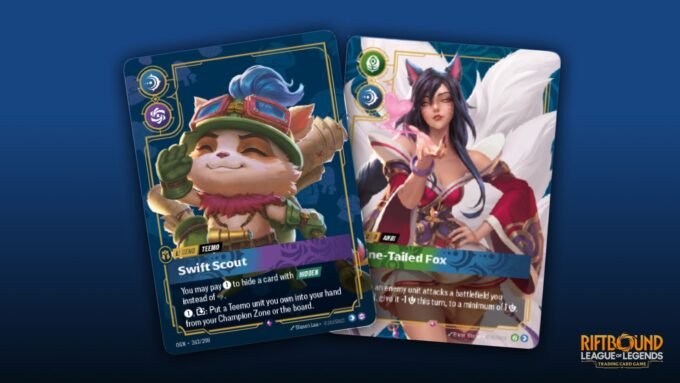


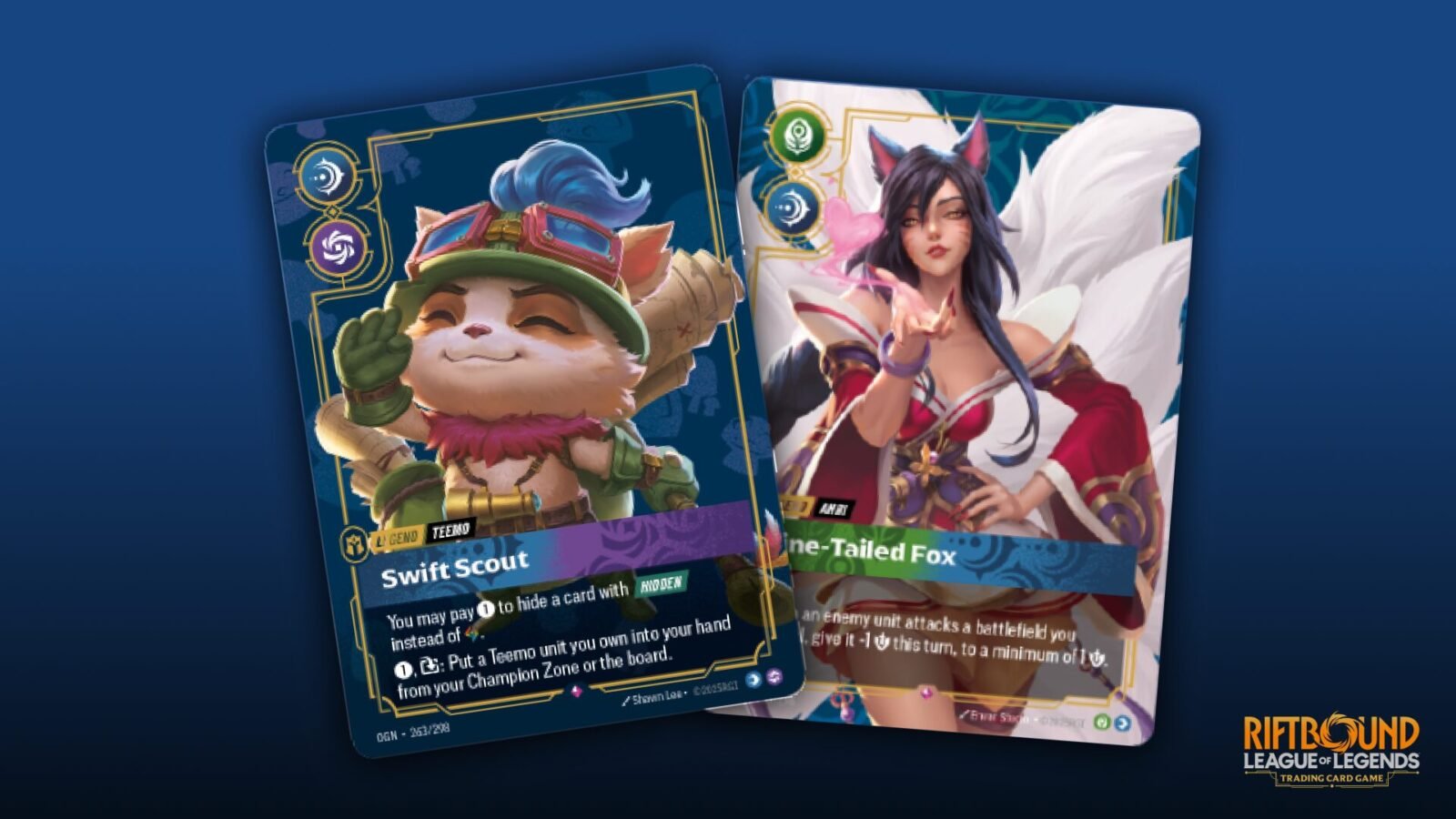
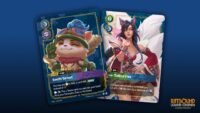
If you have spent any serious time in League of Legends, you already know the champions, the lore, and the rivalries between them. Riot Games has now taken all of that and turned it into a physical trading card game. Riftbound TCG puts you in control of a 40-card deck built around a champion of your choice, and you battle it out across contested battlefields to claim victory.
Developed by Riot and published by UVS Games for English-speaking regions, Riftbound launched its debut set Origins in October 2025. The reception was strong enough that supply ran short almost immediately, and a recent competitive event in Las Vegas drew close to 4,000 players, with organizers reportedly having to cut ticket sales before the venue hit capacity. For a game that has only had an English release for a few months, the early momentum is hard to ignore.
How Riftbound TCG Actually Works
At its core, Riftbound is built around a Champion Legend. Think of your Legend the way you think of a Commander in Magic: The Gathering or a Hero in Flesh and Blood. Your Legend sits outside the action, untargetable and indestructible, but their domain determines the entire shape of your deck. There are six domains in total, organized as opposing pairs: Fury and Calm, Mind and Body, Order and Chaos. Each has its own playstyle, and your champion can only use cards that belong to their domain or domains.
You also bring a separate 12-card Rune deck, which acts as your resource system, and three Battlefield cards that will literally change the terrain of every game you play.
The goal is to reach 8 victory points by capturing and holding Battlefields. You can play 1v1, or jump into multiplayer formats like Skirmish (3-player free-for-all), War (4-player free-for-all), or 2v2 Team Mode. When you move a unit from your base onto a Battlefield, a Showdown begins. If the Battlefield is uncontested, you fight to claim it. If an enemy unit is already there, it becomes a combat Showdown where attackers and defenders clash based on their might. Equal might means a draw and both units hit the trash. Stronger might takes the territory.
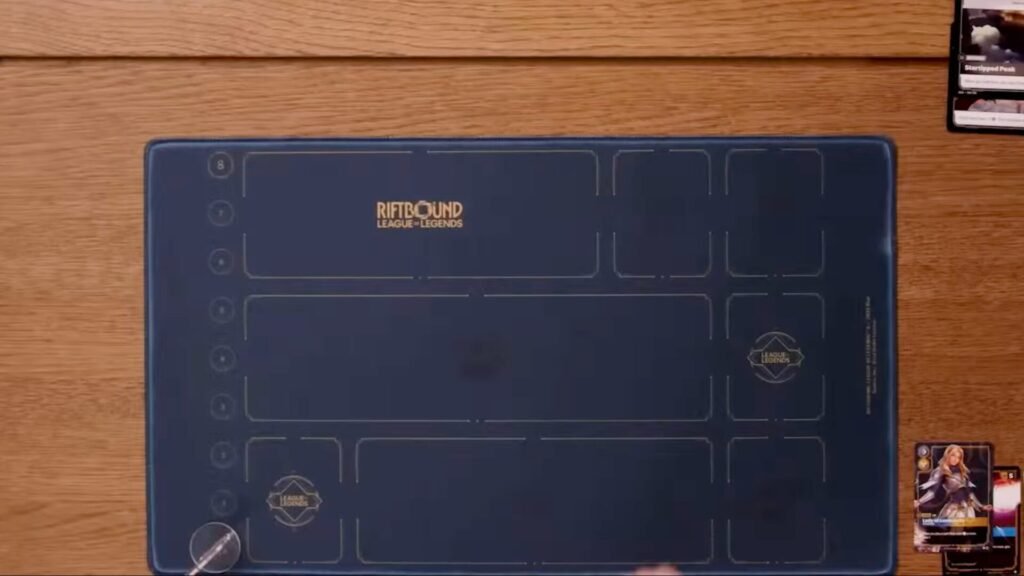
The turn structure follows a clean ABCD flow: Awaken (ready your exhausted cards), Beginning (score points for Battlefields you hold), Channel (generate runes from your Rune deck), and Draw. Then comes the Action phase, where you can play cards and activate abilities in any order for as long as you have the resources to do it.
Card types in Riftbound TCG will feel familiar if you have played any other card game before. Units push into Battlefields and contest territory. Gear stays in play and buffs your champion and their forces. Spells fire off a one-time effect and go straight to the trash. Reaction spells can be played at any time, and yes, there is a chain system similar to Yu-Gi-Oh and MTG, so those counter-play moments are very much part of the game.
One of the more interesting mechanics is Hidden, a keyword that lets you tuck a card face-down onto a Battlefield you control by recycling a rune. It sits there until you are ready to activate it for free. It plays a lot like Yu-Gi-Oh’s trap cards, and it adds a layer of mind games that keeps opponents guessing.
The final point rule is worth noting too. You can score your first 7 victory points through any combination of methods, but that 8th point has to be earned specifically by either conquering both Battlefields at once or holding a single Battlefield into your next turn. It is a small rule that adds a lot of tension to the endgame.
Two Sets In, More On the Way
Riftbound currently has two sets available. Origins introduced the core mechanics and a wide cast of champions. The second set, Spiritforged, shifted the spotlight to Ionian champions like Irelia and has been well received by the community.
The roadmap from here looks packed. Unleashed drops May 8, 2026 and brings in Vi, Diana, Rengar, and Master Yi. Vendetta follows on July 31, 2026 with Akali, Renekton, and Nasus. A fourth set called Radiance is planned for Q4 2026. Four sets in the first full year is a strong commitment, and the competitive infrastructure is already building around it with official Regional Qualifiers and active community tools like RiftDex for deck building.
If you are a League of Legends fan who has been curious about physical card games, Riftbound is probably the most natural on-ramp you are going to find. The champions are already familiar, the gameplay has more depth than the entry point suggests, and with four sets planned for 2026 alone, the game is clearly being built to last.
FAQs About Riftbound TCG
Riftbound TCG is a physical trading card game developed by Riot Games, set in the League of Legends universe. Players build a 40-card deck around a champion and battle for control of Battlefields to reach 8 victory points.
Pick a Champion Legend, build a deck around their domains, and battle across Battlefields to score points. You channel runes each turn to pay for units, spells, and gear. First to 8 victory points wins.
Two to four players. Formats include 1v1, Skirmish (3-player free-for-all), War (4-player free-for-all), and 2v2 Team Mode.
Two sets are out now: Origins and Spiritforged. Three more are coming in 2026: Unleashed (May 8), Vendetta (July 31), and Radiance (Q4).
Through the official site at riftbound.leagueoflegends.com, local game shops, and online retailers carrying UVS Games products.
Follow Blooing on Facebook, YouTube, and TikTok for more Tabletop news and reviews.







Leave a comment